

Artificial intelligence (AI) is transforming the way we learn languages. From instant translations to personalized vocabulary practice, AI-powered tools are more accessible than ever, and they’re already a helpful tool for learning language. At VivaLing, we embrace innovation, and we recognize that AI can be a valuable companion on your language-learning journey.
But there’s an important truth worth keeping in mind: while AI can enhance learning, it cannot replace human teachers. In fact, the most effective language learning happens when technology and human interaction work together. Let’s explore why.
What AI Brings to Language Learning
AI offers some advantages that make it an exciting resource for students:
1. Accessibility, Convenience and Instant Feedback
AI tools can correct grammar, suggest vocabulary, and even simulate conversations with feedback, and they are available 24/7, creating unlimited learning opportunities.
2. Personalized Learning Paths
Many AI platforms adapt to level, pace, and learning style, which is more engaging and motivating than the multitude of learning apps available.
3. Unlimited Repetition Without Pressure
Practicing with AI removes the fear of making mistakes in front of others. Exercises can be repeated as many times as needed, which can be useful for building confidence in the early stages of learning.
All of these benefits make AI a powerful support system. However, language learning is not just about memorizing words or correcting grammar; it’s about communication, culture, and human connection. And this is where AI reaches its limits.
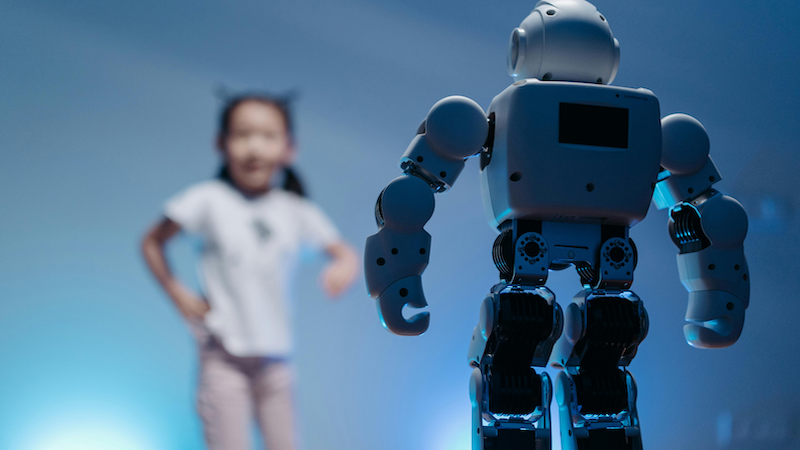
Why Teachers Matter More Than Ever
Learning a language is fundamentally a human experience. Here’s what teachers bring that AI simply cannot replicate:
1. Real Communication and Emotional Connection
Language is about expressing ideas, emotions, and identity. A human teacher listens, responds, and adapts in real time, understanding nuance, humor, tone, and cultural context in a way AI still struggles to match. Although the voice function of AI has developed significantly, it is still evident what is natural and what is an AI voice – the cadence, sentence structure and use of vocabulary is often unnatural. This prohibits authentic communication.
Speaking with a teacher is engaging in meaningful communication. This interaction builds confidence and fluency far more effectively than scripted or artificial conversations.
2. Cultural Insight and Context
Languages are deeply tied to culture. A teacher can explain why certain phrases are used, when they’re appropriate, and what they really mean in context. They can share real-life examples, traditions, and perspectives that bring the language to life.
AI can provide translations, but it often misses subtleties like politeness levels, idiomatic expressions, or regional differences – things that matter greatly in real conversations.
3. Motivation and Accountability
Staying motivated is one of the biggest challenges in language learning. A teacher encourages, celebrates progress, and helps push through difficulties. They provide structure and accountability, things no app can fully replace.
Human interaction also makes learning more enjoyable. A good teacher creates a supportive environment where students feel comfortable taking risks and making mistakes.
4. Adaptive, Creative Teaching
Teachers don’t just follow a script. They observe how each students learns best, identify strengths and weaknesses, and adjust their approach accordingly. They can introduce games, storytelling, role-play, or discussions based on your interests, even at the spur of a moment.
AI can personalize content, but it lacks the creativity and intuition that experienced teachers bring to each lesson.
The Best Approach: Combining AI and Human Teaching
Rather than seeing AI and teachers as competing forces, it’s more helpful to think of them as partners. When used together, they create a powerful learning experience.
For example, you might use AI tools during the week to review vocabulary and practice sentence structures. Then, in your VivaLing lesson, you apply that knowledge in real conversations with your coach, getting immediate feedback and building fluency.
This combination accelerates progress in a way that neither AI nor traditional teaching could achieve alone.
Looking Ahead
AI will continue to evolve, and its role in education will grow. It will become more sophisticated, more interactive, and more integrated into our daily lives. At VivaLing, we welcome these advancements and see them as opportunities to enrich the learning experience.
However, one thing will remain constant: language is about people.
No matter how advanced technology becomes, it cannot replace the human connection at the heart of communication. The laughter shared in a lesson, the look of pride received by a human teacher, the confidence gained through real conversation – these are the moments that truly shape language learning.
Final Thoughts
AI is an incredible tool. It can support your learning and make practice more accessible, but it works best when guided by something uniquely human: a skilled, caring teacher who knows and understands you.
At VivaLing, we believe in combining the best of both worlds — innovative tools and inspiring teachers — to help you reach your full potential.
So go ahead: use AI, explore new tools, and practice as much as you can, but don’t forget that your greatest progress will come from real conversations, real connections, and real people.
Because in the end, language is not just something you learn; it’s something you live.